
Write-In Candidate
Charles Eakins
Arizona House of Representatives · Legislative District 1
Write-In Candidate
Arizona House of Representatives · Legislative District 1
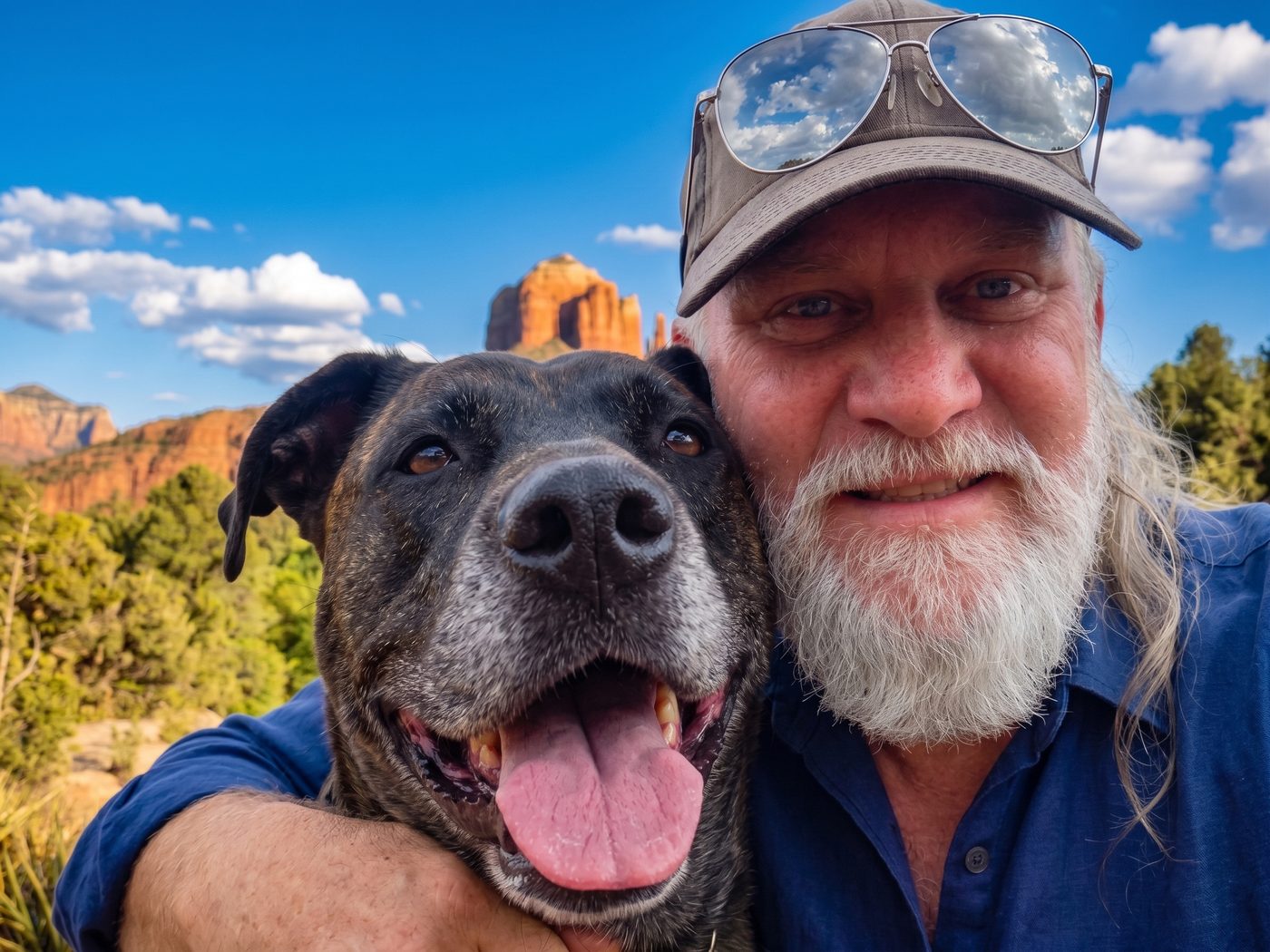
I started working at fourteen, on job sites with my dad doing construction. Through my teens and into adulthood I apprenticed under my grandfather hanging drywall — hanging board, taping, mudding, sanding. He built houses up and down the Verde Valley, and he taught me the trade the way it gets taught: on the job, with him watching. It's honest work, and the kind where nobody has to tell you whether you did it right. You can see it.
I'd been writing software since I was twelve. In my mid-twenties I went into IT full time, and I've spent more than 25 years since building backend systems, test automation, and hardware firmware.
I never stopped making things with my hands. 3D printing, laser cutting and engraving, CAD design. I designed the circuit board and wrote the software for a Prescott Valley company's product — which is about the best description of how I work that I've got: figure out the hardware, then make it do something useful.
I also wrote GridWalker, a free, open-source app for wilderness search and rescue. It works offline, with no cell signal, because that's the situation searches actually happen in. I gave it away rather than sell it.
I was born in Phoenix, but Pine is home. That's where most of my formative years were — a small town under the Mogollon Rim, a couple thousand people. Rural Arizona isn't an abstraction to me. It's where I'm from.
I come from a long line of rebels, and I can trace it back to the founding of this country. My eighth great-grandfather, William Shippen Sr., was a Philadelphia physician who represented Pennsylvania in the Continental Congress.
He also built things meant to outlast him. With Benjamin Franklin he founded the academy that became the University of Pennsylvania, and served as a trustee there for twenty-four years. His brother Edward was one of the founders of Princeton, where William sat on the board from 1765 to 1796 — thirty-one years. Two of the oldest universities in the country, and the Shippens had a hand in both.
My grandfather was aboard the USS Utah when she was torpedoed and capsized at Pearl Harbor on December 7, 1941. Fifty-eight men did not get off that ship. He did.
Years later, during the Korean War, he served aboard the USS Missouri — and it's worth saying what that ship was.
The Missouri was commissioned in June 1944 and reached the Pacific that January. She covered the landings at Iwo Jima, fought through the Okinawa campaign, and shelled the Japanese home islands, earning three battle stars. In May 1945 she became flagship of the Third Fleet. Then, on the morning of September 2, 1945, in Tokyo Bay, with MacArthur and Nimitz aboard, the Japanese delegation signed the instrument of surrender on her deck. The Second World War ended on that ship.
My grandfather came aboard later, for a different war. The Missouri went back into combat off Korea and earned five more battle stars — shore bombardment at Inchon, fire support for the Marines at the Chosin Reservoir. That was the deck he stood on.
That's who I come from. One grandfather who came home from two wars, another who built houses across the Verde Valley and put a taping knife in my hands, and a father who had me on a job site at fourteen. People who made things that had to hold up, and who didn't get to argue with the result.
A write-in campaign is a printing and outreach problem. Signs, palm cards showing a correctly marked ballot, and reaching District 1 voters before ballots mail on October 7.